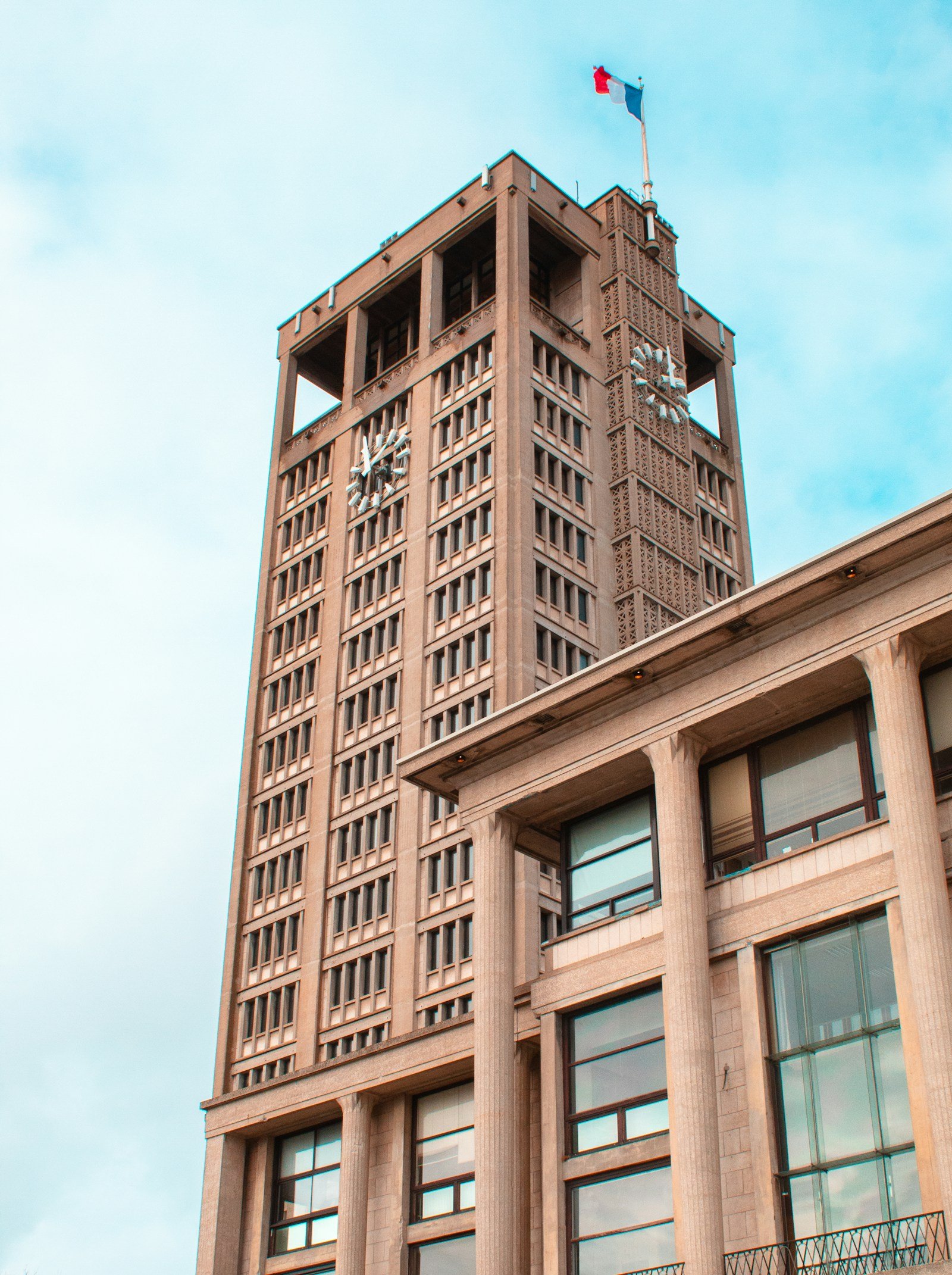
Seine-Maritime, Normandy
A private car and an English-speaking chauffeur between your Paris hotel, the three Paris airports and Le Havre, whether you are joining a ship, leaving one, or coming to see the only twentieth-century city centre on the UNESCO list.
From central Paris, one way: Executive Eco from €380 · Premium Van from €600 · tolls included
Instant price
Tell us where you are going and the price appears straight away. Nothing is charged online. A real person confirms your transfer in writing, usually within the hour.
Fixed price, agreed before you travel.Child seats, tolls, meet and greet and waiting time all included.
Form not loading? Open the booking page or message us on WhatsApp.
Le Havre was founded in 1517 by Francis I because Harfleur and Honfleur were silting up and France needed a deep-water port on the Channel. For four centuries it was exactly that. Then, in September 1944, Allied bombing to dislodge the German garrison destroyed the centre almost completely: around five thousand civilians were killed and eighty thousand people lost their homes. There was very little left to restore.
What went up instead was one of the boldest urban projects in Europe. Auguste Perret and his team rebuilt the whole centre between 1945 and 1964 in reinforced concrete, on a strict grid, with wide streets and a consistent module running through every building. It divided opinion for decades. In 2005 UNESCO listed it, which is unusual for a modern city, on the grounds that it is an exceptionally complete and coherent example of post-war planning and of what concrete can do when someone means it.
You either love it or you do not, and the honest answer is that most people arrive sceptical and leave impressed. Saint-Joseph, Perret's church with its 107-metre lantern tower full of coloured glass, tends to do the persuading. Alongside it there is Oscar Niemeyer's white Volcan, Jean Nouvel's swimming baths in the docks, and the MuMa, which holds the second-largest collection of Impressionist painting in France after the Musee d'Orsay. That is not a coincidence: Monet grew up here and painted the sunrise over this harbour in 1872, and the picture gave the whole movement its name.
Most people who ask us about Le Havre are getting on or off a ship, so here is how that works.
Le Havre is the Channel port that lines sell as "Paris". A ship berths early, passengers spend the day in Paris and are back on board that evening. It is a long day, roughly two hours ten each way, and it is entirely doable with a car and a chauffeur who understands the deadline. What it is not is a day to leave to chance: a coach excursion sets the timetable for you, and a train involves a transfer at Rouen with luggage.
We do three things here. We meet arriving passengers at the cruise terminal and drive them to a Paris hotel or airport. We collect from a Paris address and deliver to the ship for embarkation. And for a single day in port, we take you into Paris, wait, and have you back at the gangway with time in hand. For that last one, tell us your all-aboard time when you ask for a price and we will build the day backwards from it.
Your chauffeur meets you where you are, at the time you choose. There is no queue, no shared shuttle and no meter running.
Any address in Paris or the suburbs. Your chauffeur is at the door at the agreed time and helps with the luggage.
Your chauffeur tracks the flight and adjusts to delays at no extra cost. Meet and greet in the arrivals hall with a name board, or kerbside if you prefer.
We meet ships at the Pointe de Floride terminals and passengers at Le Havre station. Send us the ship name and the berthing time and your chauffeur will be there before you are off.
Le Havre is about 200 km northwest of central Paris and takes roughly two hours ten by road, following the Seine on the A13 past Rouen and then crossing to the coast.
The exact distance depends on your Paris address, so the calculator above works on the real road distance between your two addresses rather than a rounded number. Tolls, fuel and parking are already inside the price.
The train from Gare Saint-Lazare takes a little over two hours and is perfectly comfortable if you are travelling light. With cruise luggage it is a different proposition, and if your ship berths at seven and sails at six, the twenty minutes you spend queueing for a taxi at either end is exactly the twenty minutes you wanted in the Marais.
A compact centre you can cross on foot, and one of the best small art museums in France.
Perret's church, a 107-metre concrete lantern lit from inside by thousands of pieces of coloured glass. It works as a war memorial and it is the single most convincing thing in the city.
The Andre Malraux museum on the seafront, with Boudin, Dufy, Pissarro and Monet, and enormous windows facing the light that all of them came here to paint.
A 1950s apartment restored exactly as it was handed over, fitted kitchen and all. Guided visits only, booked through the tourist office, and genuinely fascinating.
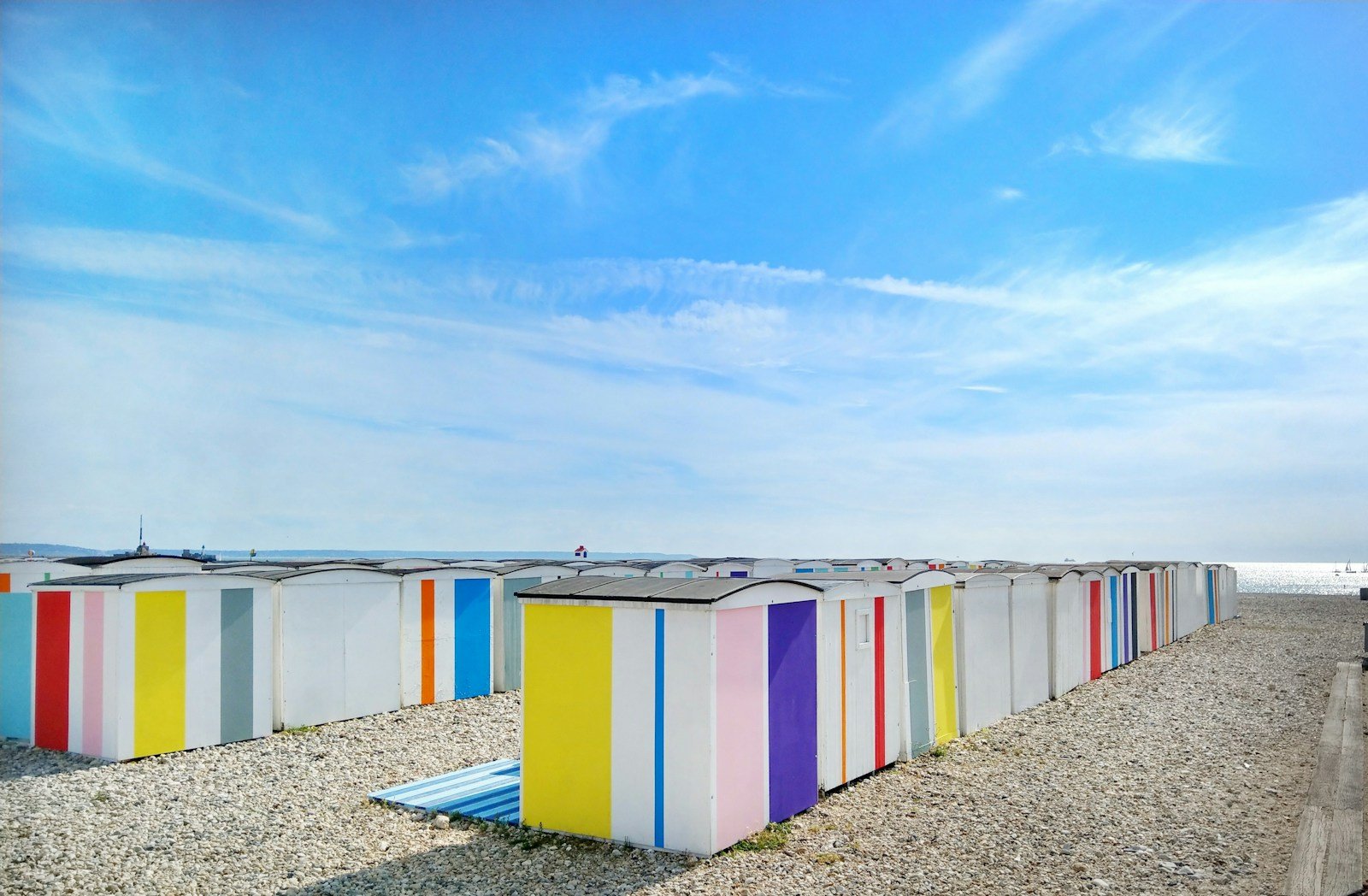
Niemeyer's Volcan, Nouvel's Bains des Docks, the stacked-container arch on the quay, and a long pebble beach lined with coloured huts fifteen minutes from the centre.
Two hours each way, often with cruise luggage. It is worth getting the small things right.
Baby seats, toddler seats and boosters, fitted before you get in. Tell us the ages when you book and they will be in the car.
Three large cases in the Executive Eco, seven in the Premium Van. Most cruise parties want the van, and it costs less than two cars.
Give us the all-aboard time and your chauffeur works backwards from it, with a margin for traffic on the A13 rather than a hopeful estimate.
One fixed price per kilometre of real road distance. No surge, no night surcharge, no airport supplement.
At 200 km the fare is set by the distance rather than the minimum, so the calculator above gives you the real figure straight away. A day in port, where the car waits in Paris and brings you back to the ship, is quoted separately and in writing before you book. Ask for it when you send us your all-aboard time.
About two hours ten for roughly 200 km on the A13. Allow longer if you are leaving central Paris between eight and ten in the morning.
Yes, and it is one of the things we do most often. Send us the ship, the berthing time and the all-aboard time, and we will build the day around them and quote the waiting time in writing before you book.
Yes. Your chauffeur waits at the terminal with a name board. Give us the ship name and we will follow the berthing, so a late arrival does not cost you anything.
With hand luggage, the Gare Saint-Lazare train is fine. With cruise cases, a family, or a fixed sailing time, the door-to-door car is the one that removes the risk.
2.00 EUR per kilometre in the Executive Eco and 3.20 EUR per kilometre in the Premium Van, on the real road distance from your exact address. Put your pickup point into the calculator above and you will have the figure in seconds.
Yes. Honfleur is twenty minutes from Le Havre across the Normandy bridge and Etretat is half an hour up the coast. Tell us before you book so the route and the price include it.
Yes, at no extra cost. Baby seats, toddler seats and boosters, fitted before you arrive. Just tell us the ages of the children when you book.
Up to three passengers with three large cases in the Executive Eco, and up to seven passengers with seven large cases in the Premium Van. If you are close to the limit, take the van.
Tell us your ship, your address and your times. You will have a fixed price in writing and an English-speaking chauffeur waiting.